
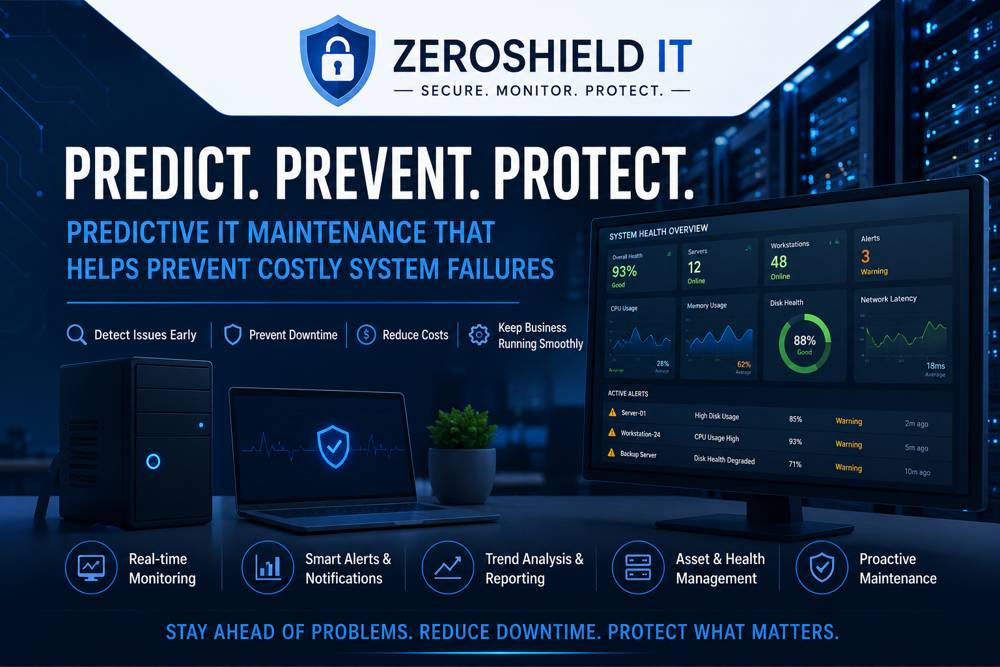
How Predictive IT Maintenance Helps Prevent Costly System Failures
In today's digital business environment, technology downtime is more than just an inconvenience—it directly affects productivity, customer satisfaction, and revenue. Whether it's a server outage, network disruption, or failing workstation, unexpected IT failures can quickly impact daily operations and create costly delays.
Many business owners assume hardware and systems fail without warning. In reality, most IT failures provide warning signs days, weeks, or even months before a critical outage occurs. By implementing predictive IT maintenance and proactive monitoring, organizations can identify these warning signs early and resolve issues before they affect business operations.
This article explains how predictive IT maintenance works, why it matters, and how businesses can use monitoring tools and asset management strategies to reduce downtime and improve operational reliability. You can also explore our managed IT support services for continuous system monitoring and infrastructure management.
What Is Predictive IT Maintenance?
Predictive IT maintenance is a proactive approach to managing technology infrastructure. Instead of waiting for equipment or software to fail before taking action, organizations continuously monitor their systems to identify warning signs and potential risks.
Traditional IT support is often reactive:
- A device fails.
- Users report the issue.
- The IT team investigates and resolves the problem.
Predictive maintenance takes a different approach:
- Systems are continuously monitored.
- Potential failures are detected early.
- Corrective action is taken before downtime occurs.
This strategy helps businesses reduce operational disruptions, lower maintenance costs, and extend the lifespan of their IT assets. Learn more about how this connects with backup and disaster recovery strategies for full business continuity.
Why Downtime Costs Businesses More Than They Think
Unexpected downtime can affect every department within an organization. Even a short outage can result in significant financial and operational consequences.
Lost Productivity
When employees lose access to critical applications, files, or communication systems, productivity immediately declines. Projects are delayed, customer requests remain unanswered, and daily operations slow down.
Revenue Loss
For businesses that rely on digital systems, every minute of downtime can translate into lost sales opportunities and reduced revenue.
Customer Dissatisfaction
Customers expect reliable service. System outages can damage trust, delay deliveries, and negatively affect customer experience.
Emergency Repair Costs
Unexpected failures often require urgent support, emergency hardware replacements, and after-hours troubleshooting, increasing overall IT expenses.
These risks are exactly why companies often combine predictive maintenance with cybersecurity solutions to reduce both technical failures and security-related downtime.
Common Warning Signs Before IT Failures Occur
One of the biggest advantages of predictive maintenance is the ability to detect issues before they become critical problems.
Hard Drive Health Degradation
Storage devices rarely fail without warning. Modern hard drives and SSDs provide health information that can reveal early signs of deterioration.
- Bad sectors
- Read and write errors
- Decreasing health scores
- Abnormal disk activity
Monitoring disk health can help prevent data loss and costly outages.
High CPU Usage
Consistently high processor utilization may indicate overloaded applications, malware infections, inefficient processes, or resource shortages.
Tracking CPU trends allows IT teams to identify bottlenecks before users experience performance issues.
Memory Exhaustion
Applications with memory leaks or insufficient resources can gradually consume available RAM, eventually causing crashes and instability.
Continuous memory monitoring helps administrators detect unusual patterns and take corrective action before services are affected.
Network Performance Issues
Increased latency, packet loss, and connectivity interruptions are often early indicators of network infrastructure problems.
- Failing switches
- Bandwidth congestion
- Router issues
- Configuration problems
Monitoring network performance helps organizations resolve issues before they impact users. If your office already experiences slow performance, you may find this guide useful: why your office network becomes slow .
Businesses that do not need a continuous help desk can still reduce avoidable failures through a scheduled preventive maintenance review of their systems, security, backups, and network health.
0 Comments
Leave a Comment
No comments yet. Be the first to share your thoughts!