
Why Every Business Needs an IT Asset Inventory (And How It Can Save Thousands)
Imagine receiving a call from an employee whose laptop suddenly stops working. The IT team needs to replace it quickly, but nobody knows when it was purchased, whether it's still under warranty, or even what specifications it has.
Now imagine this happening across dozens of devices, software subscriptions, network switches, printers, and servers.
This is a common challenge for many small and medium-sized businesses. As organizations grow, technology assets multiply rapidly, making them increasingly difficult to track and manage. Without a centralized inventory, businesses often lose visibility into their equipment, resulting in unnecessary spending, security risks, and operational inefficiencies.
What Is an IT Asset Inventory?
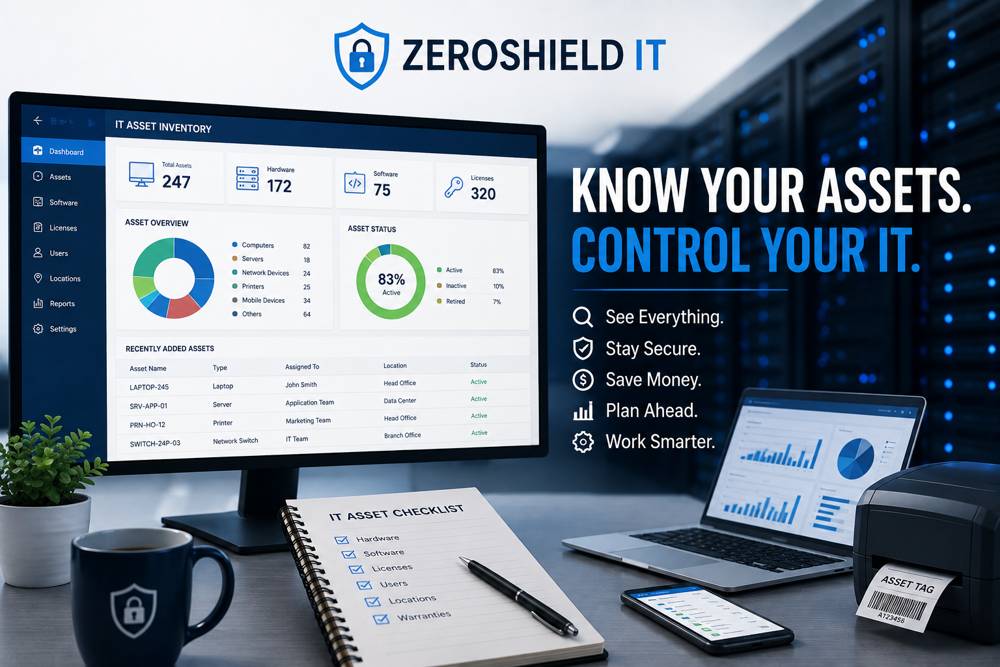
An IT asset inventory is a centralized record of all technology assets owned or managed by a business. It contains detailed information about hardware, software, and infrastructure components that support daily operations.
- Desktop computers and workstations
- Laptops
- Servers
- Network switches
- Routers and firewalls
- Printers and scanners
- Mobile devices
- Software licenses
- Cloud subscriptions
Why Spreadsheets Eventually Fail as an Asset Tracking Solution
Many small businesses start tracking technology assets using spreadsheets because they are simple and familiar. While this approach may work for a handful of devices, it quickly becomes difficult to maintain as the organization grows.
Spreadsheets rely heavily on manual updates, which means information often becomes outdated. Employees change departments, devices are reassigned, warranties expire, and software licenses are renewed without the inventory being updated.
Over time, businesses lose confidence in the accuracy of the information stored in these spreadsheets.
A dedicated IT asset management solution provides centralized visibility, automated updates, better reporting, and significantly reduces the risk of human error.
How Asset Management and Monitoring Work Together
Many businesses view asset management and infrastructure monitoring as separate disciplines. In reality, they are most effective when combined.
Asset management tells you what equipment exists. Monitoring tells you how healthy that equipment is.
By integrating monitoring data with asset records, organizations gain visibility into:
- Hardware health
- Performance trends
- Storage utilization
- CPU and memory usage
- Network performance
- Maintenance requirements
This combination allows businesses to move from reactive support to proactive maintenance.
Learn more in our article about Preventing Costly System Failures Through Predictive Maintenance.
Turn Your Asset Inventory Into an IT Plan
An accurate inventory makes it easier to schedule preventive IT maintenance, identify systems that need ongoing technical support, and build a practical technology lifecycle and modernization plan.
0 Comments
Leave a Comment
No comments yet. Be the first to share your thoughts!