
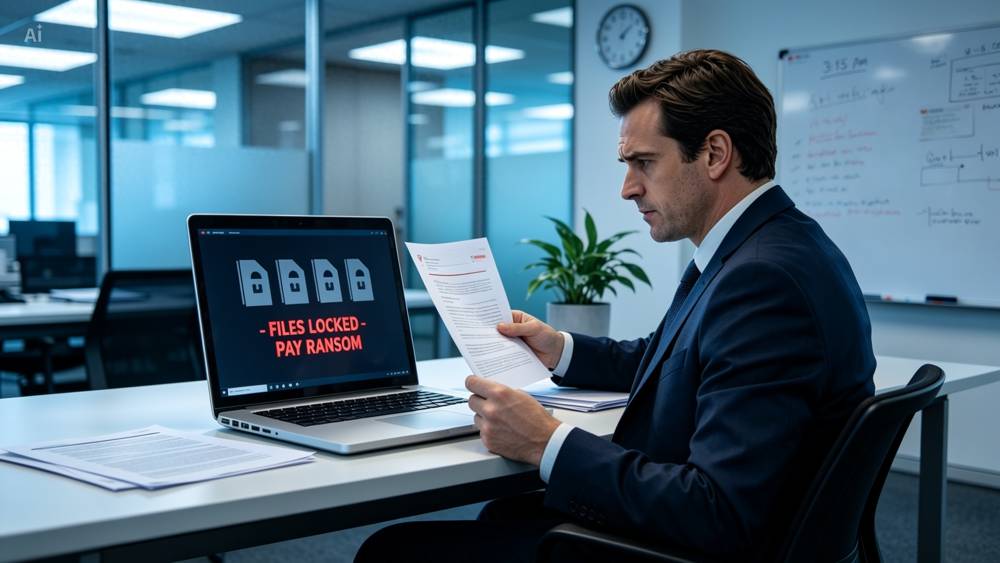
What Is Ransomware?
Ransomware is a type of cyber attack that encrypts your files and systems, preventing employees from accessing important business data. Attackers then demand payment in exchange for restoring access. Today, ransomware attacks target organizations of all sizes, including small businesses in Lebanon that may not have strong cybersecurity protection. If you want to understand how these risks connect to real business environments, you can explore our cybersecurity and IT services.
Many business owners believe ransomware only affects large enterprises, but small and medium-sized businesses are often easier targets because they usually lack dedicated IT security teams, advanced backup systems, and continuous monitoring. Learn more about how we support businesses in our about ZeroShield IT page.
How Ransomware Attacks Usually Start
Most ransomware infections begin with a simple mistake. Common attack methods include:
- Phishing emails containing infected attachments
- Weak or reused passwords
- Outdated operating systems and software
- Unsecured remote desktop access
- Unsafe downloads and fake software updates
- Compromised office networks and devices
These risks are commonly addressed through professional IT monitoring and security hardening, which you can request via our contact page.
The Real Business Impact of Ransomware
A ransomware attack can completely disrupt daily operations. Businesses may lose access to customer information, accounting systems, project files, emails, and internal communication tools.
The damage is often much larger than the ransom itself. Companies may experience:
- Operational downtime
- Loss of customer trust
- Financial losses
- Legal and compliance risks
- Permanent data loss
- Recovery costs and IT rebuilding expenses
For many small businesses, even a few days of downtime can create serious financial pressure. Our ongoing cybersecurity protection are designed to reduce this risk.
Why Backups Alone Are Not Enough
Many companies believe having a single backup device is enough protection. Unfortunately, ransomware attackers now actively target backup systems as well.
A modern cybersecurity strategy should include:
- Immutable backups
- Offline backup copies
- Cloud backup protection
- Regular backup testing
- Endpoint security monitoring
- Network segmentation
- Multi-factor authentication
Without a proper backup and disaster recovery strategy, businesses may not be able to recover even if they pay the ransom. You can review how we implement these systems in our backup and disaster recovery services.
How Small Businesses in Lebanon Can Reduce Cybersecurity Risks
Businesses in Lebanon can significantly improve protection by implementing practical cybersecurity measures instead of relying only on antivirus software.
Important security improvements include:
- Keeping systems and software updated
- Training employees to identify phishing attacks
- Using strong passwords and MFA
- Restricting unnecessary user permissions
- Monitoring network activity
- Deploying reliable backup and disaster recovery solutions
- Working with trusted cybersecurity and managed IT providers
If your organization needs a structured security plan, you can get guidance directly through our consultation service.
The Importance of Business Continuity Planning
Cybersecurity is no longer only about preventing attacks. Businesses must also prepare for recovery and operational continuity.
A proper business continuity plan helps organizations:
- Recover faster after incidents
- Reduce operational downtime
- Protect customer trust
- Maintain critical business services
- Minimize financial damage
Learn how we design resilience-focused systems through our IT infrastructure and continuity solutions.
Final Thoughts
Ransomware attacks continue to grow worldwide, and small businesses in Lebanon are not immune. Investing in cybersecurity, managed IT services, backup solutions, and disaster recovery planning is no longer optional for modern businesses.
The cost of prevention is often far lower than the cost of recovery after a cyber attack.
If your organization is unsure whether its systems are properly protected, you can start by reviewing your current setup or reaching out via our contact page.
0 Comments
Leave a Comment
No comments yet. Be the first to share your thoughts!