
Why Trusting Your Office Wi-Fi Is a Security Risk: An Introduction to Zero Trust Security
For many years, organizations relied on a traditional cybersecurity model often referred to as the perimeter security model. The concept was simple: build a strong firewall around the company network, secure the office environment, and trust anyone who successfully connected to internal systems.
This approach worked reasonably well when employees worked exclusively from the office, applications were hosted on local servers, and business devices rarely left the building.
Today, however, the way businesses operate has changed dramatically. Employees work remotely, cloud applications store sensitive data, mobile devices access corporate resources from anywhere, and cybercriminals use increasingly sophisticated attack techniques. As a result, traditional network security models are no longer sufficient.
The Problem with Traditional Network Security
Imagine your business network as a castle protected by a moat. The firewall acts as the outer wall, keeping attackers outside. Once a user successfully enters the network, they are often trusted automatically.
Unfortunately, this creates a dangerous assumption: that everything inside the network is safe.
Modern cyberattacks frequently exploit this weakness. If an attacker compromises a single employee account through phishing, stolen credentials, malware, or social engineering, they may gain access to internal systems and move throughout the network with minimal resistance.
This technique, known as lateral movement, allows attackers to move deeper into systems and is often the root cause of major breaches.
Learn more about real-world attack methods in our guide on small business cybersecurity risks and protections .
What Is Zero Trust Security?
Zero Trust Security is a modern cybersecurity framework based on a simple but powerful principle:
Never Trust, Always Verify.
Instead of automatically trusting users, devices, or applications because they are connected to the corporate network, every access request must be continuously validated.
This concept is closely related to modern defense strategies such as predictive IT maintenance and continuous system monitoring , where systems are constantly evaluated for risks.
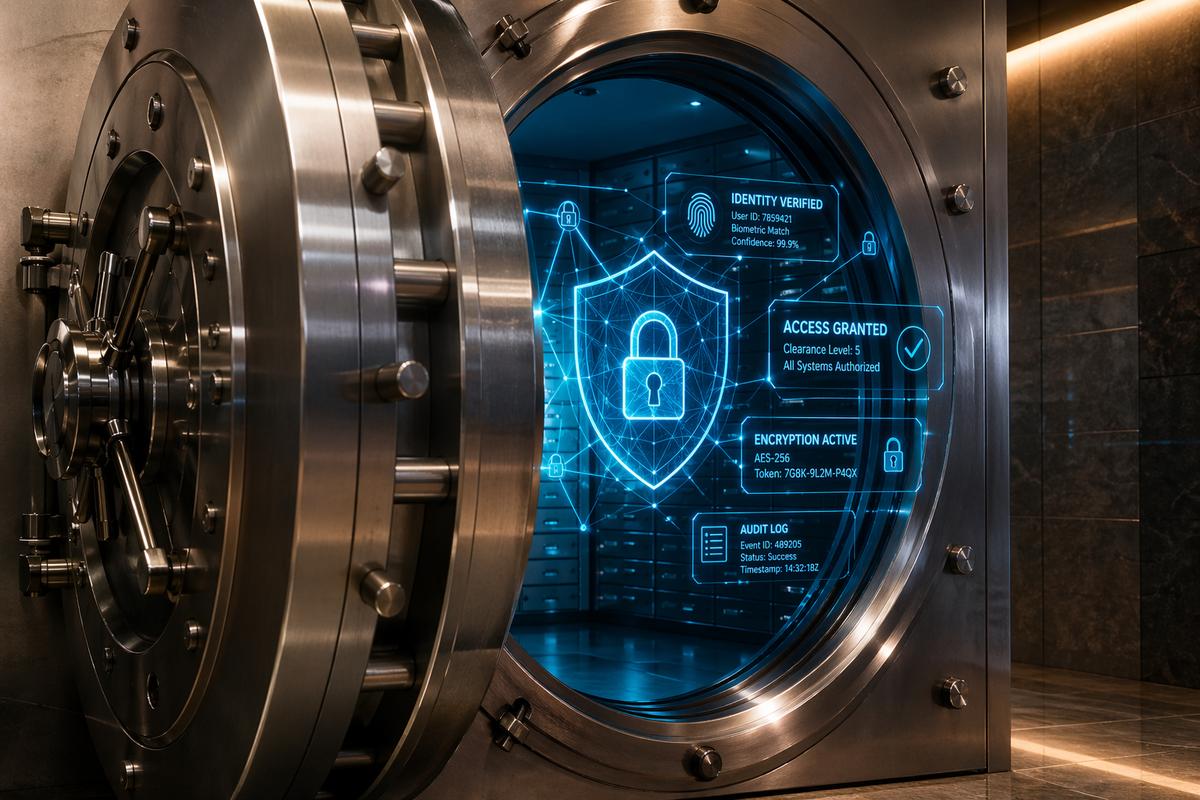
Think of It Like a Bank Vault, Not a Castle
A more accurate comparison is a modern bank vault.
Walking into a bank does not automatically grant access to every safe deposit box. Security controls verify identity, permissions, and authorization before allowing access to valuable assets.
Zero Trust applies the same concept to business networks.
Why Zero Trust Matters in 2026
The modern threat landscape continues to evolve rapidly. Businesses now face risks from ransomware campaigns, phishing attacks, and compromised cloud accounts.
Many of these risks can be mitigated through proper resilience planning, such as hybrid backup and disaster recovery strategies .
How ZeroShield IT Helps Businesses Implement Zero Trust
At ZeroShield IT, we help organizations modernize their cybersecurity strategy by implementing Zero Trust principles that reduce risk and improve visibility across users, devices, and business systems.
Our services also integrate with broader protection strategies such as managed cybersecurity solutions .
Final Thoughts
Zero Trust Security is no longer optional in modern business environments.
Combining it with backup strategies, monitoring systems, and cybersecurity frameworks creates a much stronger defense posture.
Zero Trust controls are stronger when they are supported by proper network segmentation and infrastructure design rather than relying on a single trusted office network.
0 Comments
Leave a Comment
No comments yet. Be the first to share your thoughts!